
Laravel engineering since 2017 / Madurai, India
Custom Laravel Development Services
We've built and still run six production platforms on Laravel — school ERP, tender management, chemical compliance, construction estimation and more. Hire that team, working with Claude Code every day, to build or take over your Laravel application.
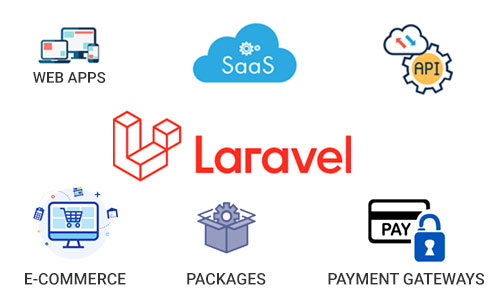
Our Laravel experience
Nine years on one framework, mostly on our own products
Most agencies learn Laravel on client budgets. We learned it building software we had to keep running — which is a different education. When your product breaks at 2am, you find out quickly which patterns hold and which ones only look good in a tutorial.
That's where our internal libraries came from: tenancy, roles and permissions, audit logging, imports and exports, invoicing, notification handling. They're the reason a Laravel project with us starts at week three of the work rather than week one.
We work across Laravel 10, 11, 12 and 13, and we're equally happy inheriting an existing codebase as starting from an empty repository.
First Laravel product
Our first framework build, written as reusable packages with separate super admin, admin and member panels, plus an API for third-party developers.
Transaction banking platform
Ledgers, approval chains and role separation across branches — the work that taught us how to design permission models that survive audits.
Internal MVP framework
The reusable Laravel foundation we now start client projects from: authentication, tenancy, RBAC, billing and admin scaffolding already solved.
Product portfolio
GegoK12, ChurchCMS, BOQ Manager, ChemTracker, eTender and Daybook — six products in production, several with companion mobile apps.
AI-assisted delivery
Claude Code adopted across all 18 engineers as standard daily tooling, changing how fast we scaffold, test, document and refactor Laravel code.
What we build
Where Laravel is the right call
Laravel earns its place on business software with real depth — permissions, reporting, documents, money. These are the builds we take on most often.
Multi-tenant SaaS platforms
Tenant isolation, subscription billing, plan limits and self-serve onboarding, built with Cashier or a direct gateway integration.
ERP and internal platforms
Inventory, procurement, HR, field operations and finance workflows, usually replacing a spreadsheet estate that outgrew itself years ago.
APIs and backends
Documented REST APIs with Sanctum or Passport, powering Next.js, React, Vue and Flutter clients from a single contract.
Admin panels and dashboards
Filament, Nova or custom Livewire panels with granular permissions, bulk actions, exports and audit trails your operations team will actually use.
Marketplaces and portals
Multi-vendor catalogues, tender and bidding portals, member areas, and payment splits across parties.
Integrations and automation
Payment gateways, messaging, accounting and CRM systems connected through queued jobs and webhook handling that survives retries.
AI-assisted Laravel development
The same team, working considerably faster
Every engineer here uses Claude Code as part of their normal day. It's not a service line we sell separately — it's how the Laravel work gets done, and it shows up in your timeline rather than in a slide.
What speeds up
- Migrations, models, form requests, policies and resource controllers
- Pest and PHPUnit coverage written with the feature, not after it
- Reading an unfamiliar inherited codebase and mapping it before we touch anything
- Version upgrades and large refactors that used to be quoted in months
- API documentation and integration guides that stay current with the code
What stays with our engineers
- Data modelling and permission design
- Query performance, indexing and N+1 elimination
- Security review and dependency auditing before release
- Human code review on every pull request, without exception
Proof
Laravel products we build, ship and support ourselves
Not case studies from a portfolio we bought. These are our products, with real customers and real support tickets.
GegoK12
School ERP running for more than 20 international clients. Multi-school tenancy, role-based access across staff, parents and students, and companion mobile apps.
BOQ Manager
Bill-of-quantities platform with project-level permissions, approval flows and export-heavy reporting for estimation teams.
eTender
Tender management with time-bound access rules, sealed submissions and strict role separation between buyers, evaluators and vendors.
ChemTracker
Chemical inventory and compliance tracking for organisations that need audit trails and data separation between sites.
ChurchCMS
Member management, events, giving and communications for congregations, with role-scoped access for ministry teams.
Daybook
Day-to-day income and expense recording for small businesses, built to stay usable on a phone in the middle of a working day.
Laravel upgrades and takeovers
Stuck on an old version, or between developers?
Laravel 11 stopped receiving bug fixes in early 2026 and Laravel 12's window closes in August 2026. If you're on 8, 9 or 10, you're running without a safety net — and that's before the PHP version question.
Version upgrades
We upgrade to Laravel 12 or 13 in staged, reviewable steps rather than one enormous pull request nobody can approve.
- Dependency and package compatibility audit first, with a written plan
- Test coverage added before the upgrade where it's missing
- PHP version migration handled alongside the framework
- Deployed to staging for your team to sign off before production
Inheriting someone else's code
A developer left, an agency went quiet, or the original team never documented anything. We pick it up.
- Codebase audit with an honest report on quality, risk and technical debt
- Documentation and environment setup written so you're not dependent on one person
- Immediate security and performance fixes prioritised over a rewrite
- A rebuild recommendation only when the numbers genuinely support one
How to work with us
Three ways to engage a Laravel team
| Model | Best when | What you get | Commitment |
|---|---|---|---|
| Hire dedicated Laravel developers | You have a roadmap and a product owner, and need capacity that reports into your process | Named engineers working in your sprints, tools and repositories, with a tech lead overseeing quality | Monthly, minimum three months |
| Fixed-scope project | Requirements are clear enough to estimate and you need budget certainty | Costed phases, agreed milestones, fortnightly demos and a defined handover | Per project, typically 8–20 weeks |
| Product enhancement | One of our six products is close to what you need and customisation beats building from zero | A configured deployment of the base product plus your specific modules and branding | Licence plus a customisation phase |
Every engagement includes source in your repositories from the first commit, full IP transfer, and infrastructure in your own cloud accounts. Communication runs on your channels — Slack, Teams, Jira, Basecamp or email.
Technical depth
The stack around our Laravel work
Laravel and PHP
Laravel 10, 11, 12 and 13 on PHP 8.2 and 8.3. Eloquent, query builder, migrations, middleware, policies and gates, console commands, task scheduling, queues and Horizon, events and listeners, broadcasting with Reverb, Octane for high-throughput services, Sanctum and Passport for API authentication, Cashier for subscriptions, Scout for search, Telescope and Pulse for observability, localisation and multi-currency support.
Frontend and mobile
Livewire and Alpine.js for server-driven interfaces, Inertia for tighter coupling, and decoupled React or Next.js clients where SEO or a separate frontend team makes that the better fit. Vue and Nuxt on existing projects. Tailwind CSS throughout. Flutter, Kotlin and Android companion apps built by three dedicated mobile engineers against the same API.
Admin panels and packages
Filament, Laravel Nova and Backpack for admin surfaces, Spatie Permission and Laratrust for role-based access, Spatie Media Library, Activity Log and Backup, Excel import and export, PDF generation, and our own internal packages for tenancy, invoicing and audit trails.
Data and infrastructure
MySQL, MariaDB, PostgreSQL and Redis, with MongoDB where the data shape calls for it. Deployment on AWS, DigitalOcean, Vultr, Laravel Forge and Vapor. Docker for environment parity, GitHub Actions and GitLab CI for pipelines, Nginx and Apache, zero-downtime deploys, automated backups with tested restores, and error tracking plus uptime monitoring wired up before launch.
Payments and third-party integrations
Stripe, Razorpay, PayPal, Paddle, Authorize.net, Google Pay and Apple Pay for payments and subscriptions. Twilio, MSG91 and WhatsApp Business for messaging. Google Workspace and Calendar, Firebase push notifications, Pusher for realtime, and open-source integrations including Mautic for marketing automation and Dolibarr for ERP.
Process and quality
Two-week sprints with a demo at the end of each. Pest and PHPUnit for testing, Pint and PHPStan in CI, pull request review by a senior engineer on every change, staging environments that mirror production, and written runbooks handed over at launch.
Why GegoSoft
What working with us is actually like

We've made these mistakes already
Nine years of Laravel across our own products and long-term client platforms in the USA, Australia, Europe and Dubai. The patterns we bring you were paid for once already.

Faster starts, not rushed ones
Internal libraries plus AI-assisted development mean the foundation is in place in weeks. The time saved goes into your product logic, not into the invoice.

You see working software every fortnight
A staging environment you can log into, a demo every two weeks, and priorities you can change between sprints without renegotiating the contract.

Indian rates, product-team standards
Madurai costs with the engineering practice of a team that has to live with its own code in production. Written estimates, no surprise change orders.

Overlap with your working hours
Our clients run across four time zones, so we're used to it. Slack, Teams, calls and email — whatever your team already uses.

We stay after launch
Most of our client relationships run for years. Support agreements, ongoing sprints, or a clean handover to your in-house team — your call, not ours.
Open source
What we give back to the Laravel community
GegoCart is our MIT-licensed multi-vendor shopping cart — Laravel for the API and admin panel, Nuxt for the storefront. GegoK12, our school ERP, is open source too and runs for schools in more than a dozen countries.
Publishing code we're willing to have read is the clearest evidence we can offer about how we write it. You can look before you hire.
Questions we get asked
Hiring a Laravel team, answered plainly
How much does Laravel development cost?
Dedicated Laravel developers are engaged monthly, and fixed-scope projects are quoted after a short discovery conversation. Cost depends on seniority, team size and duration rather than a headline hourly figure, so send us the brief and you'll get a written estimate with the assumptions spelled out.
Can I hire a single Laravel developer, or only a full team?
Either. A single dedicated developer works well when you have your own tech lead. For most projects we suggest a small pod — a Laravel engineer, a frontend engineer and a part-time tech lead — because review quality drops when someone works alone.
Will you work with our existing Laravel codebase?
Yes, and it's a large share of our work. We start with a codebase audit and give you an honest report on quality, security and technical debt before proposing anything. Where a rewrite isn't justified, we'll say so.
Which Laravel version should we build on?
New projects go on Laravel 13, the current major release, which needs PHP 8.3 or above. Laravel 12 remains a reasonable choice if a dependency you rely on hasn't caught up yet. Anything on Laravel 10 or below should be scheduled for an upgrade — bug fixes have ended on those versions.
Should we use Livewire, Inertia or a separate React frontend?
Livewire keeps everything in one codebase and one team, which suits internal tools and admin-heavy products. Inertia suits teams comfortable in Vue or React who still want Laravel routing. A separate Next.js frontend makes sense when public SEO matters or when web and mobile share one API. We recommend during discovery rather than by default.
Do you build mobile apps alongside the Laravel backend?
Yes. Three dedicated mobile engineers build Flutter, Kotlin and Android apps against the same API as the web application, covering offline support, push notifications and App Store and Play Store releases.
Who owns the code and the intellectual property?
You do. Source lives in your repositories from the first commit, infrastructure sits in your cloud accounts, and IP transfers to you in full. Nothing about the arrangement requires you to keep working with us.
Does AI-assisted development affect code quality?
Our engineers use Claude Code daily for scaffolding, tests, documentation and refactors. Architecture, data modelling, security review and pull request review stay with senior engineers — no change reaches your main branch without a human approving it. In practice test coverage has gone up, because writing tests is one of the things that got cheaper.
Free quote
Tell us about your Laravel project
Send us what you have — a brief, a wireframe, a repository, or just the problem you're trying to solve. A Laravel engineer and a business analyst read it, and you'll hear back within one working day with questions, an approach and an estimate.
- No sales call required before you get a technical answer
- NDA signed before you share anything sensitive
- Existing codebases welcome, however messy
Prefer email? Write to our contact page and it reaches the same team.
Ready to start, or just weighing options?
Either is fine. A 45-minute call with our Laravel lead will give you a view on architecture, effort and timeline — whether or not you build it with us.