
Healthcare software / Madurai, India
Healthcare Software Development Company in India
We don't only build healthcare software for clients — we run our own. DentalPro.cloud and tryiDoc are live products from SmartDocx AI Systems, our healthcare venture co-founded with a practising doctor. Every clinical assumption on this page has been argued about with someone who sees patients.

Why us rather than a general software vendor
We have skin in this game, not just a healthcare page on our website
Most agencies enter healthcare through a client project and learn the domain on that client's budget. We went the other way. GegoSoft co-founded SmartDocx AI Systems, a healthcare technology venture, and shipped two products into a market we then had to support.
DentalPro.cloud
Practice management for dental clinics and chains — appointments, treatment plans, clinical notes, billing and multi-branch access control. Live with clinics in India, expanding across the Middle East.
tryiDoc
Clinical documentation tooling built around how doctors actually record a consultation — fast, structured, and designed to not add minutes to an already short appointment.
What that means for your project
We've already made the mistakes — on consent capture, on role hierarchies across branches, on what a receptionist will and won't do at 9am. You get those decisions as defaults instead of discovering them in month four.
A clinician in the room
Our healthcare venture has a practising doctor as co-founder and managing director. When a workflow question comes up — what a triage step really involves, when a nurse can override a field, what a prescription must legally contain — we ask a clinician rather than guessing from a competitor's screenshot.
Engineering depth behind it
Healthcare products are ordinary software problems wearing a lab coat: multi-tenancy, permissions, integrations, audit trails, uptime. GegoSoft runs six production platforms across education, construction, procurement and finance, plus long-term client work in the USA, Australia, Europe and Dubai.
What we build
Healthcare software development services
For hospitals, clinic chains, diagnostic labs, pharmacies and digital health startups — built from scratch, or built on top of what you already run.
EMR and EHR systems
Patient records, encounters, prescriptions, lab results and documents, with the interoperability to exchange them.
Telemedicine platforms
Video consultations, scheduling, e-prescriptions and payments, built to hold up on an average Indian mobile connection.

Patient engagement
Portals and apps for booking, reminders, reports, follow-up and two-way messaging with the clinic.

Healthcare mobile apps
Flutter and Kotlin apps for patients, doctors and field staff, sharing one API with the web platform.
Pharmacy and inventory
Dispensing, stock, batch and expiry tracking, purchase orders and billing for pharmacies and hospital dispensaries.

Clinic and hospital websites
Accessible, fast sites with online booking and secure patient portals. See our web design service.
Device data integration
Bringing readings from wearables, monitors and lab analysers into your platform over vendor APIs, HL7 or DICOM.
Legacy modernisation
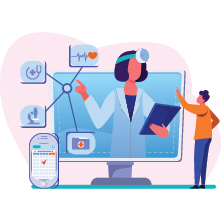
Moving an ageing on-premise system to the cloud in stages, without asking your clinics to stop working for a weekend.
Compliance
If you serve Indian patients, HIPAA is not your deadline. DPDP is
A lot of Indian healthcare software pages lead with HIPAA. Worth knowing: HIPAA is a US law that applies to US covered entities and their business associates. If your patients are in India, the framework that will actually be enforced against you is the Digital Personal Data Protection Act — and it now has firm dates.
Rules notified
The DPDP Rules 2025 were notified and the Data Protection Board of India became operational, starting the compliance clock.
Consent manager framework
Consent manager registration opens. Patient-facing platforms should be checking whether their consent architecture can interoperate.
Substantive compliance
Notice, consent, security safeguards, breach reporting, retention and data-principal rights all become enforceable, with penalties up to ₹250 crore.
What we build in from the start
- Granular consent capture, with a record of what was consented to and when
- Purpose limitation and retention rules enforced in the data layer, not in a policy PDF
- Working data access, correction and erasure flows for patients
- Encryption at rest and in transit, with role-scoped access and full audit logging
- Breach detection and a notification process your team can actually execute
The other frameworks that come up
- ABDM — ABHA-linked records and Health Information Provider integration for the Indian public digital health stack
- HL7 FHIR, HL7 v2, DICOM — exchanging records with hospital systems, labs and imaging
- HIPAA — where you serve US patients or partner with a US covered entity
- GDPR — for European patients and clients
- Middle East — data residency and health-authority requirements, handled per market
We build to these standards; we're software engineers rather than your legal advisors. On regulated device software or a formal certification path, we'll say so and work alongside a specialist rather than pretend otherwise.
Patient engagement
The parts patients actually touch
Clinical software succeeds or fails on whether a busy receptionist and an anxious patient can both use it without help. These four are where most of that is decided.
Patient portals
One place for records, lab results, prescriptions and reports, with online billing and document sharing. The design problem is restraint — a portal that shows a patient everything shows them nothing.

Assistants and automated messaging
Booking, reminders, pre-visit forms and routine questions handled automatically in the patient's own language, with a clear route to a human. We design these to never appear to give clinical advice, and to escalate rather than improvise.
Remote monitoring
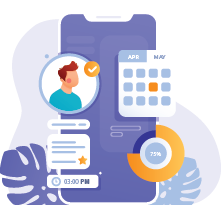
Readings from connected devices flowing into the record, with thresholds and alerts so chronic patients get attention before an admission rather than after one. The hard part is alert design — a clinician who gets forty notifications reads none of them.
Feedback and outcomes
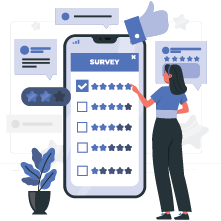
Post-visit surveys and satisfaction tracking that produce a number your management actually reviews, tied back to branch, department and clinician.
AI in healthcare software
Careful about where AI goes, fast about how we build
AI inside your product
Useful, low-risk places we've actually shipped or built: documentation and note structuring, appointment and no-show prediction, coding and billing assistance, triage of inbound patient messages, and summarising a long record for the next clinician.
Where we push back: anything that reads as diagnosis, dosing, or a clinical decision made without a named human accountable for it. That's not caution for its own sake — it's the line between a product feature and a regulated medical device.
AI in how we deliver
All 18 of our engineers use Claude Code daily. On healthcare projects this mostly buys back time in the places that usually get squeezed: test coverage, audit logging, integration work against HL7 and FHIR, and documentation that stays current.
Architecture, data modelling, security review and code review stay with senior engineers. Nothing reaches your main branch without a person approving it.
Who we work with
Four situations we see most often
| You are | What usually needs solving | Where we start |
|---|---|---|
| A clinic chain | Each branch runs slightly differently and nobody can see group-level numbers | Often a configured deployment of DentalPro or a similar base product, customised, rather than a build from zero |
| A digital health startup | You need a credible product in front of pilot customers before the next raise | A costed MVP scope, then a working platform with consent, roles and billing in 10–16 weeks |
| A hospital on legacy software | An on-premise system nobody supports, with data you can't get out of it | An audit of the current system and data, then a staged migration that keeps you running |
| A diagnostics or lab business | Reports move by WhatsApp and orders arrive on paper | Order capture, sample tracking, report delivery and analyser integration over HL7 |

Connected health
Companion apps and device data
Where a device already exists, we build the software around it: the mobile companion app, the sync layer, the cloud storage, the dashboards clinicians read, and the alerting that decides what's worth interrupting someone for.
That means Bluetooth and Wi-Fi sync, offline tolerance, push notifications, and secure storage of readings against the right patient record.
To be straight with you about scope: we build application and integration software, not embedded firmware for regulated medical devices. If your project needs certified device software, we'll tell you that early and can work alongside a specialist on the application layer.
Interfaces for clinical work
Screens used by someone with a patient waiting
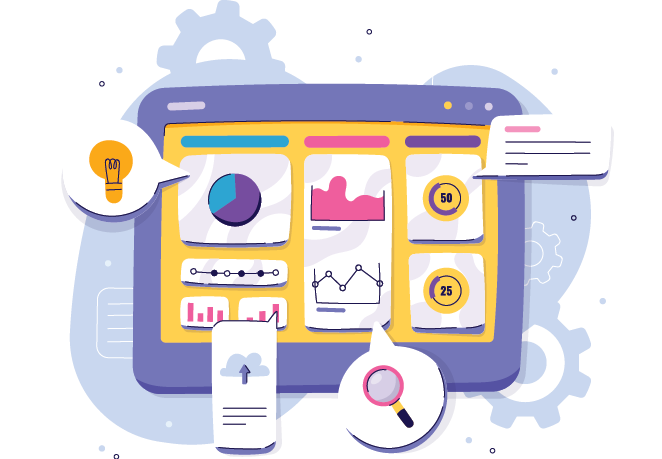
Clinical interfaces have a constraint consumer apps don't: the user is mid-consultation, under time pressure, and often typing with one hand. Every extra click gets repeated fifty times a day and quietly becomes the reason staff go back to paper.
Our design lead is the company's founder, with a UI/UX background, and design sits inside the engineering team rather than beside it. Layouts get tested against the real thing: long Indian names, missing fields, twelve-item medication lists, and a screen being read at arm's length.
Questions we get asked
Healthcare software development, answered plainly
What makes GegoSoft different from other healthcare software companies in India?
We operate our own healthcare products rather than only building for clients. DentalPro.cloud and tryiDoc come from SmartDocx AI Systems, our healthcare venture, which has a practising doctor as co-founder and managing director. Clinical workflow questions get answered by a clinician, and the tenancy, consent and permission patterns we bring to your project came from software we support ourselves.
Do we need HIPAA compliance if our patients are in India?
Usually not. HIPAA is a United States law binding on US covered entities and their business associates. For Indian patients the relevant framework is the Digital Personal Data Protection Act 2023, whose rules were notified in November 2025, with substantive obligations enforceable from 13 May 2027. We build to HIPAA where you serve US patients or partner with a US entity, and to DPDP and ABDM requirements for the Indian market. We're engineers rather than lawyers, so we build to the standard and recommend you confirm your specific obligations with counsel.
How long does it take to build a healthcare platform?
A focused MVP with core workflow, consent, role-based access and billing typically takes 10 to 16 weeks. Customising one of our existing products for your clinic or chain is faster — often four to eight weeks — because the foundation already exists. Full hospital systems and legacy migrations are scoped in phases after an audit.
Can you integrate with our existing hospital or lab systems?
Yes. We work with HL7 v2 and FHIR for record exchange, DICOM for imaging, and direct APIs where a vendor offers them. Where a legacy system has no usable interface, we've built extraction layers against databases and file drops instead. We'll tell you honestly during discovery which of those your situation calls for.
Do you support ABDM and ABHA integration?
Yes — ABHA-linked patient records and Health Information Provider integration with India's Ayushman Bharat Digital Mission stack. It's worth scoping early, because the consent and identity model affects how you design patient records in the first place.
Can you build software for a medical device?
We build the application and integration layer — companion mobile apps, cloud sync, clinician dashboards, alerting and data storage. We don't build embedded firmware for regulated medical devices or take products through device certification. If that's what you need, we'll say so early and can handle the application side alongside a specialist.
Can we customise one of your existing healthcare products instead of building new?
Often the better option. DentalPro.cloud is in production and can be configured and extended for a clinic or chain, which gets you live considerably faster and cheaper than a bespoke build. We'll be straight about when your requirements diverge far enough that a custom platform genuinely makes more sense.
Who owns the code and the patient data?
You own both. Source in your repositories, infrastructure in your cloud accounts with data residency wherever your regulator requires it, and full IP transfer. Nothing needs to be extracted from us if you change vendor later.
Talk to us
Ready to take it a step further?
Tell us about your project or idea. A healthcare engineer reads it, not a sales coordinator, and you'll hear back with questions, an approach and an estimate.
If you'd rather see something first, DentalPro.cloud is live — ask us for a walkthrough and we'll show you a real product rather than slides.

Build it, or start from a product that already works?
That's usually the first real decision, and it changes your budget by a lot. Describe your clinic, lab or idea and we'll give you an honest view on which one fits — including when the answer is neither yet.